AI & Automation Consulting
Scoped systems that earn their keep — specific automations and models that do real work, not transformation theater. I find the few places AI actually pays off and build those.
SCOPE · FIXEDOUTPUT · SHIPPED
Two practices, one standard: scoped AI & automation, and purpose-built RF, telemetry, and ISR sensing. No hype, no lock-in — systems you own, audit, and keep running on your own ground.
One engineer, one standard — from the model down to the sensor in the field.
Select a channel. Each practice is a self-contained capability set — software that earns its keep, and hardware built for the field.
Scoped, candid, and built to leave you owning the result.
Scoped systems that earn their keep — specific automations and models that do real work, not transformation theater. I find the few places AI actually pays off and build those.
Working sessions for your team on the tools and workflows you will actually run — practical, applied, and grounded in your own systems, not slideware.
Models, pipelines, and tooling that run on infrastructure you own and control. Private and offline by default; the cloud is a deliberate choice, never the only option.
An independent, plain-spoken read on a system, a vendor, or a build plan — what is real, what is risk, and what it will actually cost to run and maintain.
Purpose-built passive sensing, custom edge hardware, and the fusion that turns raw signal into a picture you can act on.
Multi-protocol passive sensing across Wi-Fi, BLE, and broadcast telemetry. Collect, time-align, and characterize the signals in an environment without transmitting.
Purpose-built edge sensors and resilient mesh networks — designed, fabricated, and fielded. Low-power nodes that collect at the edge and report inward.
Sensor fusion into a single, real-time spatial picture — positioning, tracking, and mapping with honest, quantified uncertainty rather than false precision.
Integration of sensing, fusion, and edge compute into deployable, air-gap-capable systems — engineered to keep working when the link to anywhere else does not.
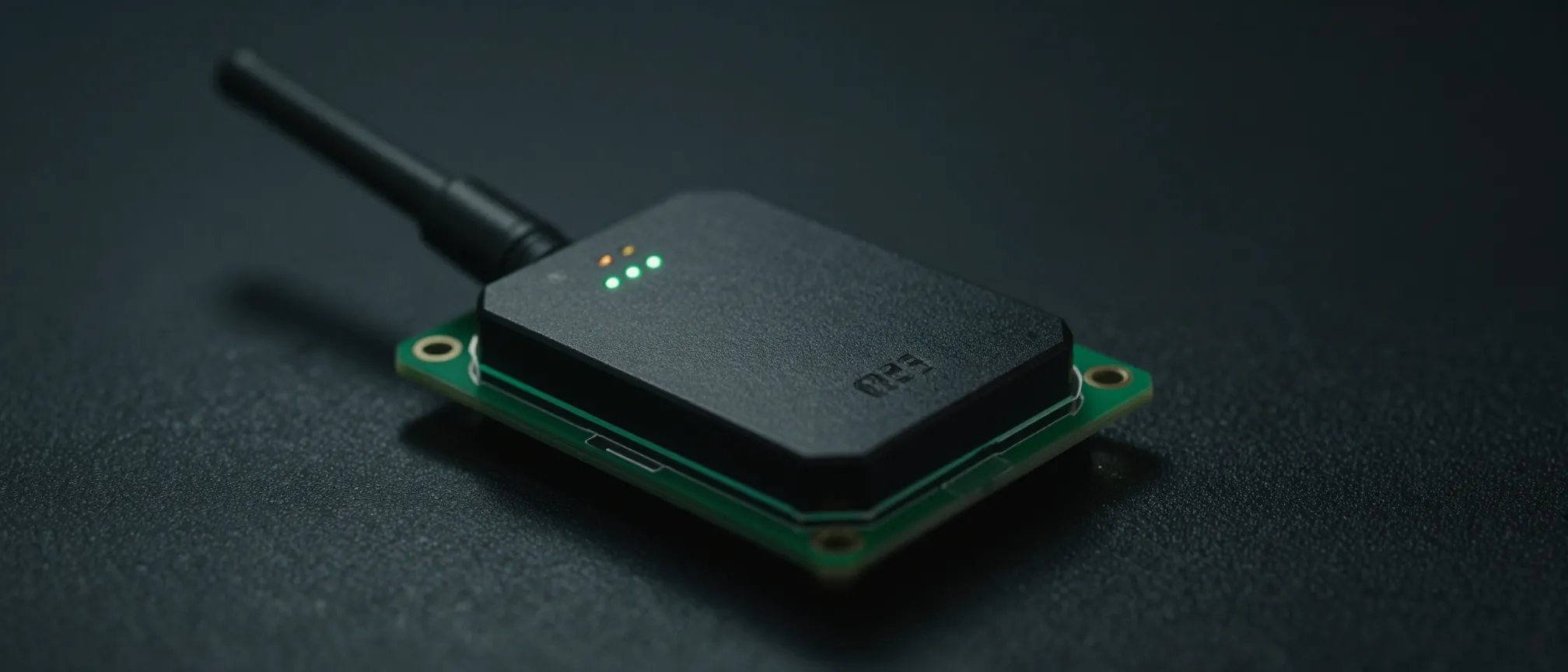
The starting assumption: it runs on your ground, you own it outright, and it tells you the truth about what it does and does not know.
Models, pipelines, and sensors run on infrastructure you control. Offline and air-gap-capable is the default, not an afterthought — nothing phones home unless you decide it should.
Code, models, and hardware are yours outright — to run, maintain, and extend without me in the loop. No hostage systems, no black boxes, no recurring license to keep your own tools working.
Every inference carries quantified uncertainty. I would rather hand you a scored probability you can act on than a confident number that quietly fails later.
If a model, a sensor, or an approach is the wrong tool, I say so. I would rather lose the line item than ship something that fails quietly later.
Fixed scope, defined output. I would rather ship one system that works than promise a transformation that never lands.
Work lands in deliberate phases, each one a working increment you can run and evaluate — not a single high-stakes drop at the end of a long silence.
Your team inherits a running system, not a slide deck — wiring diagrams, runbooks, and the operational detail to keep it alive without me in the loop.
If a model, a sensor, or an approach is the wrong tool, I say so. I would rather lose the line item than ship something that fails quietly later.
ARGUS DYNAMICS
TEXAS · USA
EST. 2026
————————
APPLIED AI
RF & SENSOR
SYSTEMS
Argus Dynamics is an independent engineering practice in Texas, founded and run by Meta_Strawman. The work spans two halves of the same discipline: applied AI and automation, and custom RF, telemetry, and ISR sensor systems — hardware and software, built and fielded by the same hands.
The through-line is sovereignty: systems that run on infrastructure the client owns and controls, private and air-gap-capable by default. You work directly with the engineer who does the build — no account layers, no handoff to juniors. If it is a fit, I will tell you. If it is not, I will tell you that too.
Tell me the problem in a few sentences — software, sensing, or both. If it is a fit, I will say so, and if it is not, I will tell you that too.
meta@argusdynamics.tech